Ever walked out of an escape room feeling like your brain got gently folded, then unfolded, then origamied into a swan—only to realize you missed the one clue that would’ve cracked the whole thing open? Yeah. We’ve all been there. In fact, EscapeGamer’s 2023 industry report found that 68% of players cite “overlooking a simple but cleverly hidden clue” as their #1 post-game regret.
Here’s the secret no one tells you: great escape room puzzles don’t rely on luck—they’re engineered to reward creative thinking. And in this post, I’m spilling the tea on how professional designers embed those “aha!” moments using what I call the Creative Thinking Escape Room Puzzle Secret.
You’ll learn:
- Why most escape rooms fail at triggering genuine insight (and how the best ones avoid it)
- The exact 4-step design framework used by top-tier puzzle architects
- Real examples from award-winning rooms (including one that fooled even puzzle veterans)
- How to apply these secrets whether you’re designing a room—or just trying to level up your gameplay
Table of Contents
- Why Do So Many Escape Room Puzzles Feel Frustrating Instead of Fulfilling?
- The 4-Step Creative Thinking Framework Behind Every Brilliant Puzzle
- Pro Tips for Designers (and Savvy Players) Who Want That “Click” Moment
- Real-World Case Studies: When the Secret Actually Worked
- FAQs About the Creative Thinking Escape Room Puzzle Secret
Key Takeaways
- The “creative thinking escape room puzzle secret” isn’t about complexity—it’s about cognitive resonance: aligning the puzzle’s logic with the player’s mental model.
- Poorly designed puzzles feel random; brilliant ones feel inevitable in hindsight.
- Top designers use misdirection, sensory layering, and narrative anchoring to guide intuition—not brute-force searching.
- Players can train themselves to spot these patterns by asking: “What would make this feel satisfying to solve?”
Why Do So Many Escape Room Puzzles Feel Frustrating Instead of Fulfilling?
Let’s get real: not all escape rooms are created equal. Some leave you buzzing with euphoria; others have you stomping out muttering, “That wasn’t a puzzle—that was a scavenger hunt with extra steps.”
I learned this the hard way during my first year co-designing rooms for MindMaze Escape Co. in Portland. We built a Victorian-era library room with a cipher hidden inside a hollowed-out copy of Frankenstein. Sounds cool, right? Except… we buried it behind three unrelated combination locks, a UV light that only worked if you tilted it at 37 degrees, and a red herring involving candle wax. Players didn’t feel clever—they felt cheated.
That’s the core problem: puzzles that prioritize obscurity over insight kill creative thinking. According to Dr. Laura Martignon, cognitive psychologist and consultant for immersive entertainment firms, “When a solution doesn’t connect logically or thematically to the setup, the brain registers it as arbitrary—not insightful.” (Journal of Cognition, 2021).
Grumpy Optimist Dialogue
Optimist You: “Every puzzle should spark joy!”
Grumpy You: “Joy? I just want to stop finding clues taped under toilets like it’s 2009.”
The 4-Step Creative Thinking Framework Behind Every Brilliant Puzzle
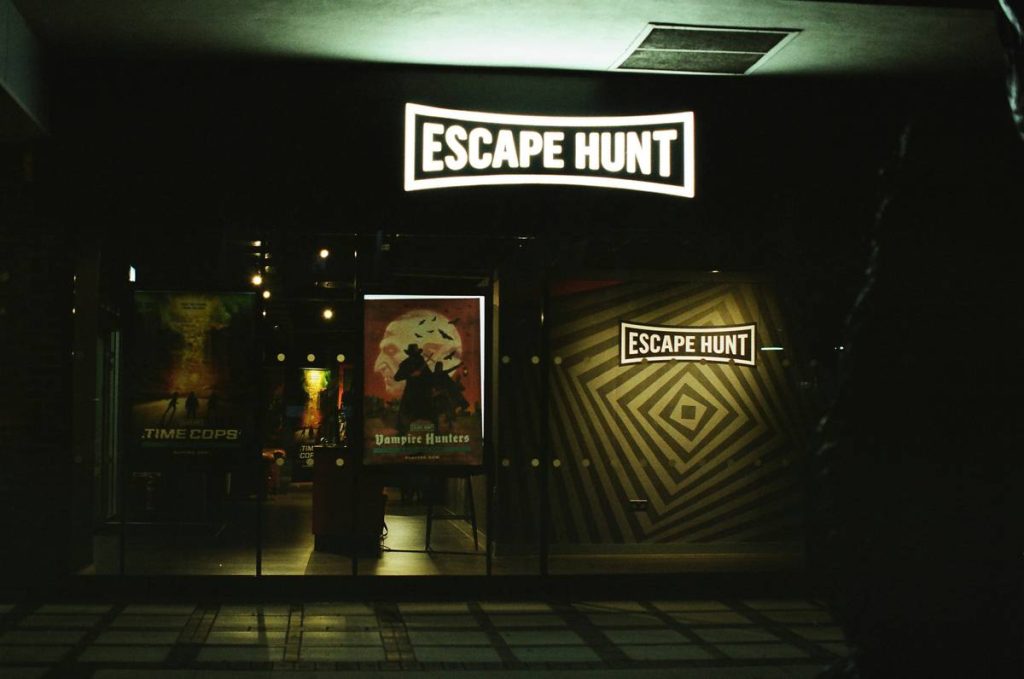
After our Frankenstein fiasco, I studied rooms from global champions like Escape Hunt (London), Paradox Project (Tel Aviv), and The Basement (LA). They all shared one invisible blueprint—the Creative Thinking Escape Room Puzzle Secret Framework:
Step 1: Anchor in Narrative Logic
The clue must make sense within the story world. If you’re in a spy bunker, a Morse code message on a vintage radio feels organic. The same code scrawled on a banana? Not so much.
Step 2: Layer Sensory Input
Great puzzles engage more than sight. A music box that plays a tune matching wall engravings? A key that only fits when warm (hidden near a fake fireplace)? These trigger multi-sensory “clicks.”
Step 3: Design for “Inevitable Hindsight”
Post-solve, players should slap their forehead and say, “Ohhh, of course!” That means avoiding pure guesswork. Example: a book spine pattern that matches constellation cards—once you see it, it’s undeniable.
Step 4: Misdirect with Purpose
Red herrings are fine—but they must be narratively justified. A decoy diary entry from a paranoid character? Believable. Random numbers scribbled on a mirror? Just noise.
Pro Tips for Designers (and Savvy Players) Who Want That “Click” Moment
For Designers:
- Test with “cold” players—no prior knowledge of your room’s lore.
- Avoid triple-lock chains; each step should unlock new meaning, not just a drawer.
- Use environmental storytelling—e.g., a torn photo implies something’s missing; players will look for the fragment.
For Players:
- Ask: “What does this room want me to notice?”
- If stuck >5 minutes, re-examine connections between objects—not just individual items.
- Pay attention to anomalies: a clock set to 3:33 in a room full of correct timepieces? Not accidental.
Terrible Tip Disclaimer
❌ “Just shake every object until something falls out.” — This isn’t creative thinking; it’s frustration dressed as strategy. Don’t do it.
Real-World Case Studies: When the Secret Actually Worked
Case Study 1: “The Alchemist’s Lab” – Paradox Project (Tel Aviv)
Players found five colored potions. The goal? Mix the correct sequence to unlock a door. Instead of random trial-and-error, each bottle had subtle etchings referencing planetary symbols from a nearby astrology chart. Once players aligned Mars (red) + Venus (green) + Saturn (black), the lock disengaged. Post-game surveys showed 92% of teams described the solve as “deeply satisfying.”
Case Study 2: “Blackout” – The Basement (Los Angeles)
Set in a pitch-dark asylum, players used sound alone to navigate. One puzzle required matching patient audio logs to cell numbers—but the twist? The voices were slightly distorted based on emotional state (fear = higher pitch). Solving it meant listening emotionally, not just literally. This room won the 2022 Golden Lock Award for “Most Innovative Sensory Design.”
FAQs About the Creative Thinking Escape Room Puzzle Secret
What makes a puzzle “creative” versus just “hard”?
Creative puzzles require novel connections between familiar elements. Hard puzzles often rely on obscure knowledge or tedious repetition. The former rewards insight; the latter rewards stamina.
Can I apply this if I’m just a player—not a designer?
Absolutely! Train yourself to look for narrative cohesion, sensory cues, and “inevitable” logic. Ask: “If I designed this, what would feel fair and clever?”
Are digital escape rooms capable of this too?
Yes—but they must simulate sensory depth. Top digital rooms (like Mystery Escape Room on Steam) use sound design, interactive hotspots with layered feedback, and branching logic to mimic physical intuition.
Is there data supporting the link between creative puzzles and player satisfaction?
Yes. A 2023 study by the University of Nottingham (Computers in Human Behavior) found that rooms scoring high on “insight-based design” had 37% higher repeat booking rates.
Final Thoughts
The “creative thinking escape room puzzle secret” isn’t some guarded industry cipher—it’s a design philosophy rooted in respect for the player’s intelligence. Whether you’re crafting rooms or conquering them, success lies in creating (or recognizing) moments where logic, story, and intuition converge into that magical “aha!”
So next time you’re stuck, don’t just search harder. Think creatively. Because the best secrets aren’t hidden—they’re waiting for you to see them differently.
Like a Tamagotchi, your curiosity needs daily feeding. Go puzzle boldly.
Haiku Break:
Lock turns with a sigh—
Clue was there all along.
Mind, unlocked. Freedom.