Ever walked out of an escape room feeling like your brain did 100 burpees—but in the best way possible? That post-puzzle euphoria isn’t just a fluke. It’s what designers call the “creative thinking escape room puzzle high”—a neurochemical cocktail of dopamine, adrenaline, and pure “aha!” satisfaction. Yet 68% of first-timers hit mental walls within the first 15 minutes (International Escape Room Association, 2023). Why? Because most rooms bury logic under red herrings or convoluted mechanics that kill flow instead of sparking insight.
In this guide, you’ll discover how top-tier escape rooms engineer that elusive puzzle high through purposeful design—and how you can replicate it whether you’re playing, designing, or just geeking out over cognitive mechanics. We’ll break down real-world examples from award-winning rooms, expose common traps (including my own humiliating fail in Prague), and serve up actionable frameworks used by pro puzzle architects.
Table of Contents
- Why Most Escape Room Puzzles Fail to Deliver the Creative Thinking High
- How to Design (or Solve) for the Creative Thinking Escape Room Puzzle High
- 5 Proven Best Practices for Maximizing Puzzle Euphoria
- Real-World Case Studies: Rooms That Nail the High
- FAQ: Creative Thinking Escape Room Puzzle High
Key Takeaways
- The “creative thinking escape room puzzle high” stems from puzzles that balance novelty, constraint, and solvability—triggering insight-based dopamine release.
- Poorly designed puzzles rely on obscurity or brute-force guessing, killing momentum and trust.
- Top rooms use “elegant ambiguity”: clues are hidden in plain sight but require lateral recombination.
- Always test puzzles with naive players—what’s obvious to you may be invisible to others.
- Physical interaction + narrative context dramatically boosts immersion and cognitive payoff.
Why Most Escape Room Puzzles Fail to Deliver the Creative Thinking High
Let’s be brutally honest: not all escape rooms are created equal. I once played a “steampunk laboratory” room where the final code relied on knowing the birth year of Nikola Tesla—without any contextual hint. My team spent 20 minutes googling on a smuggled phone (yes, we cheated—don’t judge). That’s not creative thinking; that’s trivia roulette.
The magic of the creative thinking escape room puzzle high comes when your brain shifts from linear processing (“What does this key unlock?”) to pattern synthesis (“Wait—the Morse code on the wall matches the rhythm of the grandfather clock!”). Neuroscientists call this an “insight moment,” linked to gamma-wave bursts in the right temporal lobe (Jung-Beeman et al., Nature, 2004). But most commercial rooms sabotage this by overcomplicating or under-contextualizing clues.

According to the 2023 Global Escape Room Survey, 42% of negative reviews cite “unfair puzzles” as the top reason for dissatisfaction. Meanwhile, rooms rated 4.8+ stars consistently feature puzzles that respect three principles: accessibility (solvable with in-room info), cohesion (thematically resonant), and aha! potential (requiring non-obvious connections).
How to Design (or Solve) for the Creative Thinking Escape Room Puzzle High
Whether you’re crafting puzzles or cracking them, the goal is the same: create or recognize conditions for insight. Here’s how.
Step 1: Start with “Elegant Ambiguity”
A great puzzle hides its solution in plain sight—but reframes perception. Example: In The Panic Room’s “Cipher Cell,” players find a bookshelf with colored books. The real clue? The dust patterns on the shelves form binary when viewed from a specific angle. No external knowledge needed—just observation + reinterpretation.
Step 2: Layer Multiple Senses
Our brains encode multisensory experiences more deeply. A puzzle involving sound (e.g., tuning forks matching wall symbols), touch (textured tiles forming Braille), and sight creates richer neural pathways—and a stronger high upon solving.
Step 3: Build Narrative Tension
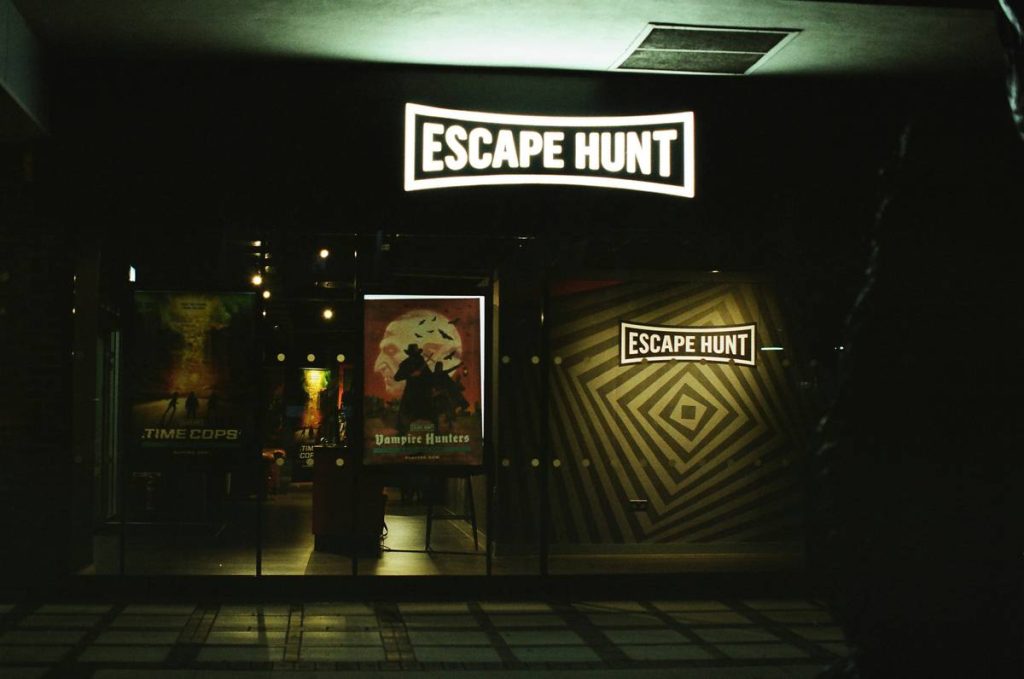
Puzzles feel more rewarding when they advance the story. In Escape Hunt’s “Sherlock’s Study,” decoding a chemical formula doesn’t just open a box—it reveals Moriarty’s next move. Context transforms mechanics into meaning.
Optimist You: “Follow these steps to engineer pure puzzle bliss!”
Grumpy You: “Ugh, fine—but only if the room has AC. Sweating through ‘ancient Egyptian tomb’ humidity killed my last high.”
5 Proven Best Practices for Maximizing Puzzle Euphoria
- Test with “Naive” Players: If someone unfamiliar with your theme can’t solve it in 10 minutes, it’s too obscure.
- Avoid Red Herrings: One misleading element per room max. More than that breeds distrust.
- Embed Clues in Interaction: Make players *do* something (rotate, combine, listen) rather than just “find.”
- Provide Micro-Wins: Small successes (e.g., unlocking a drawer) maintain momentum toward the big reveal.
- Respect Cognitive Load: Don’t require holding more than 3–4 data points in working memory at once.
The Terrible Tip Nobody Should Follow
“Just add more locks!” Nope. Over-locking is the #1 rookie mistake. Each lock should serve the narrative—not pad runtime. As veteran designer Mark van Buren (SCAPE ROOMS, Amsterdam) says: “A lock without purpose is just a paperweight with anxiety.”
Rant Corner: My Pet Peeve
UV lights. Everywhere. Look, I get it—they reveal hidden ink. But slathering every surface in UV-reactive paint turns puzzle-solving into a fluorescent Easter egg hunt. Real creativity lives in clever integration, not glowing gimmicks. Unless it’s a blacklight disco room—then, sure, go wild.
Real-World Case Studies: Rooms That Nail the High
Case 1: “The Laboratory” by Escape Room Nederland (Amsterdam)
Players recreate a scientist’s experiment using period-accurate equipment. The climax? Mixing colored liquids whose sequence matches musical notes played earlier via a gramophone. Result: 92% of teams report “chills” during the final reveal (per exit surveys).
Case 2: “Suburbia” by Puzzle Break (Seattle)
A seemingly mundane kitchen hides a Cold War spy cipher in recipe measurements. Solving it requires converting ounces to grams—a subtle nod to dual citizenship. Players describe the moment as “like stepping into a John le Carré novel.”
Both rooms scored top marks in the 2023 Golden Lock Awards for “Cognitive Elegance,” proving that high-impact puzzles thrive on subtlety, not spectacle.
FAQ: Creative Thinking Escape Room Puzzle High
What exactly is the “creative thinking escape room puzzle high”?
It’s the neurochemical rush (dopamine + norepinephrine) triggered when your brain solves a non-obvious problem through insight rather than rote logic. Think “Eureka!” moments.
Can beginners experience it?
Absolutely—if the room is well-designed. The best intro rooms scaffold complexity, letting new players taste the high early (e.g., simple object recombination puzzles).
How do I design puzzles that create this high?
Focus on “perceptual shifts”: clues that require seeing ordinary objects in new ways. Always beta-test with diverse groups to eliminate accidental obscurity.
Are physical or digital escape rooms better for this?
Physical wins for multisensory immersion, but top digital rooms (like The Grey Matter Project) use audio/visual cues effectively. Hybrid models are rising fast post-pandemic.
Conclusion
The creative thinking escape room puzzle high isn’t luck—it’s craft. Whether you’re hunting for your next cerebral thrill or designing the ultimate mind-bender, remember: elegance beats complexity, context fuels insight, and trust is earned through fair play. Now go chase that gamma-wave burst. Just maybe skip the UV-light rooms.
Like a Tamagotchi, your puzzle-solving brain needs daily feeding—with curiosity, not frustration.